Recycling and Sustainability — Flat Clearance Edmonton
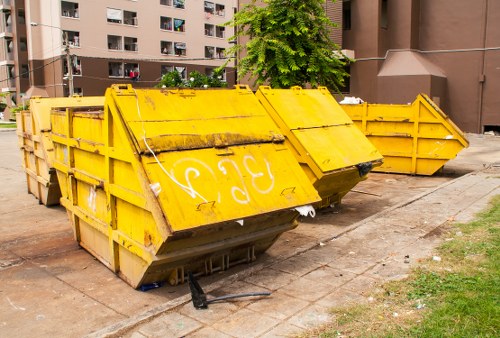 Flat Clearance Edmonton is committed to creating an eco-friendly waste disposal area that prioritises reuse, recycling and low-impact removal across the borough. Our approach to sustainable rubbish area management blends practical clearance services with a clear environmental mission: reduce landfill, increase reuse, and work with local partners to keep materials circulating in the community. We aim to be an exemplar of how flat clearances can support circular economy goals while providing efficient, reliable service to residents and landlords.
We have set a clear recycling percentage target: 85% diversion from landfill by 2028 for all flat clearance collections, with annual progress reports published internally and shared with partners. This target covers materials sent for recycling, items prepared for repair or refurbishment, and donations to community reuse projects. Our goal is to move beyond traditional rubbish removal and establish measurable outcomes for every job, tracking tonnes diverted and estimated carbon savings.
 In practice, our sustainable rubbish area strategy aligns with local borough approaches to waste separation: food and garden waste, mixed recycling, paper and cardboard, and residual waste are kept distinct. We also follow the municipal guidance for bulky waste and hazardous items, ensuring batteries, electronics and chemicals are processed through approved channels. Working alongside local transfer stations and civic amenity sites, our collections feed into a wider municipal waste network that supports proper sorting and downstream recycling.
How we sort and divert waste
We operate a staged sorting process to maximise recovery and reduce contamination. At the first stage, crews separate salvageable items for immediate reuse. At the second stage, materials are loaded and labelled for transfer to specific recycling streams. Our operations emphasise an eco-conscious rubbish removal workflow that favours reuse before recycling. Key recycling activities we prioritise include:- Furniture refurbishment and donation to local charities and furniture banks
- Electricals and WEEE recycling through accredited e-waste facilities
- Mattress and bulky item recycling via specialist processors
- Plasterboard, timber and construction waste segregation for recovery
- Textiles and soft furnishing sorting for charity resale or recycling
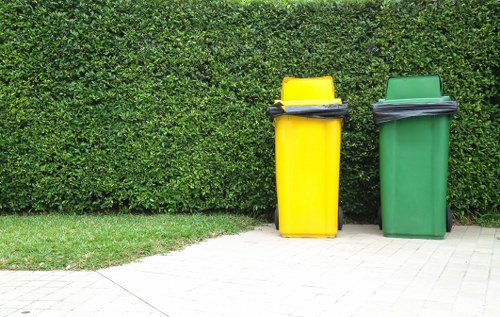 Our teams are trained in contamination prevention, and we use clear labelling and documented chains of custody when moving materials to transfer stations. By keeping streams pure — glass, card, mixed recycling, organics and residual — we increase the chance that collected materials are truly recycled and not rejected by downstream processors. This is central to building a credible eco-friendly waste disposal area.
Partnerships and local infrastructure
We maintain formal partnerships with charities, community reuse organisations and local social enterprises to ensure usable items get a second life. These relationships include agreements to donate usable furniture, household goods and small appliances to charities that support low-income households and redistribution schemes. Our collaboration with transfer stations and civic amenity sites gives us pathways for items that cannot be reused but can be recycled responsibly.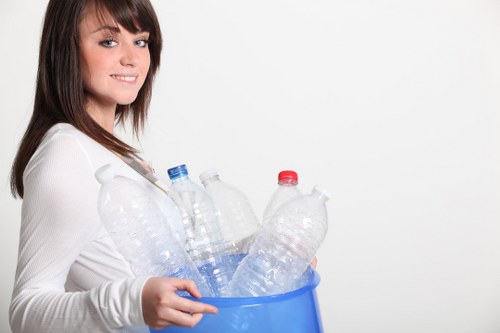 Logistics matter: our fleet includes low-carbon vans — a mix of electric and hybrid vehicles — used for inner-borough collections, supported by route optimisation software to reduce miles and idling. For dense urban runs we use smaller, low-emission vans and cargo-bike assisted delivery for final pick-ups where appropriate. This fleet strategy reduces emissions from transport and strengthens our identity as a sustainable waste clearance provider.
 Transparency and compliance are central to our sustainable rubbish area promise. We provide clear records of where materials go, weigh-in data for each job, and partner documentation from transfer stations and recycling facilities. We work within borough-level policies on waste separation and disposal, and we take extra care with hazardous streams—painting, solvents, batteries and other controlled wastes are segregated and sent to licensed handlers. Our reporting framework supports continuous improvement toward the 85% recycling target.
Why this matters — an eco-friendly approach to flat clearance reduces the environmental footprint of property turnover and refurbishment. By emphasising reuse, partnering with local charities, routing to appropriate transfer stations and using low-carbon vans, Flat Clearance Edmonton helps conserve resources and lower community emissions. We believe every clearance is an opportunity to recover value and prevent waste.
We continue to refine our sustainable rubbish area systems, staying aligned with borough guidance on waste separation and evolving recycling markets. Each job becomes part of a larger effort to divert materials from landfill, support local social causes and demonstrate how urban clearances can be run responsibly. Our ambitions are practical, measurable and community-focused.
Commitment: Flat Clearance Edmonton is dedicated to building a greener, cleaner local environment through careful waste sorting, strong charity partnerships and a low-emission fleet. We are actively working to meet and exceed our 85% recycling target, and to ensure that every cleared item is assessed for reuse, refurbishment or recycling before considering disposal.